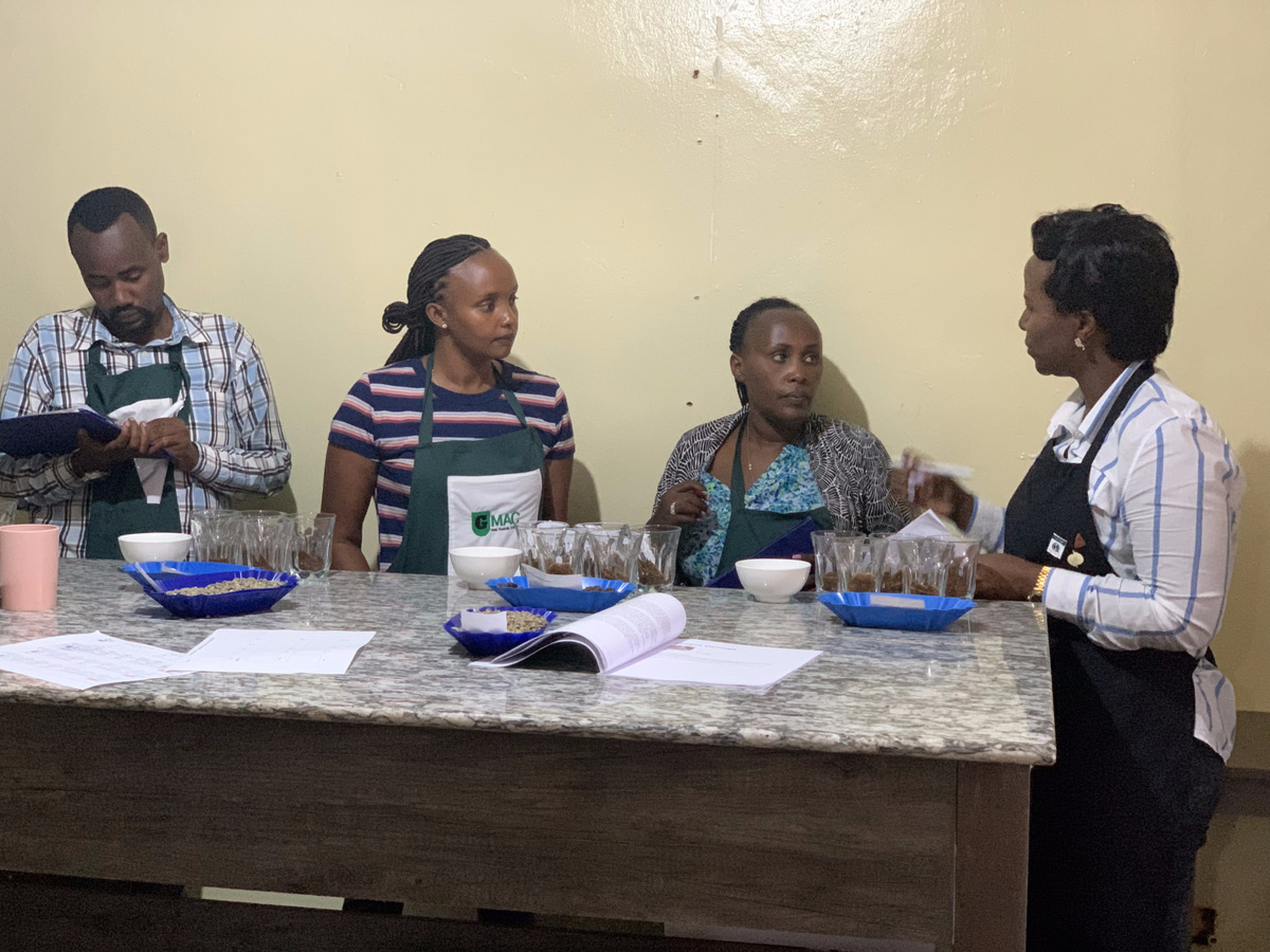
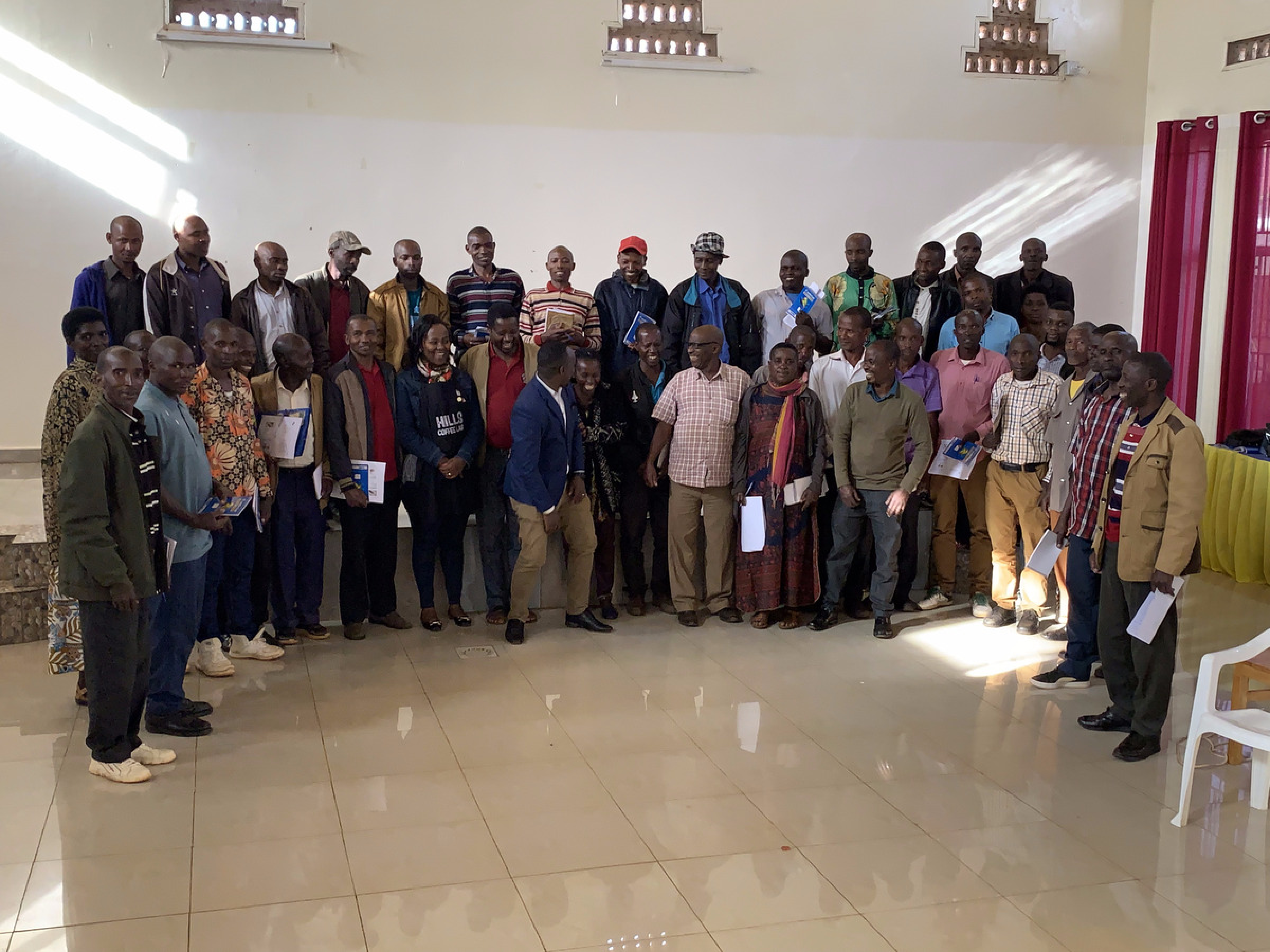
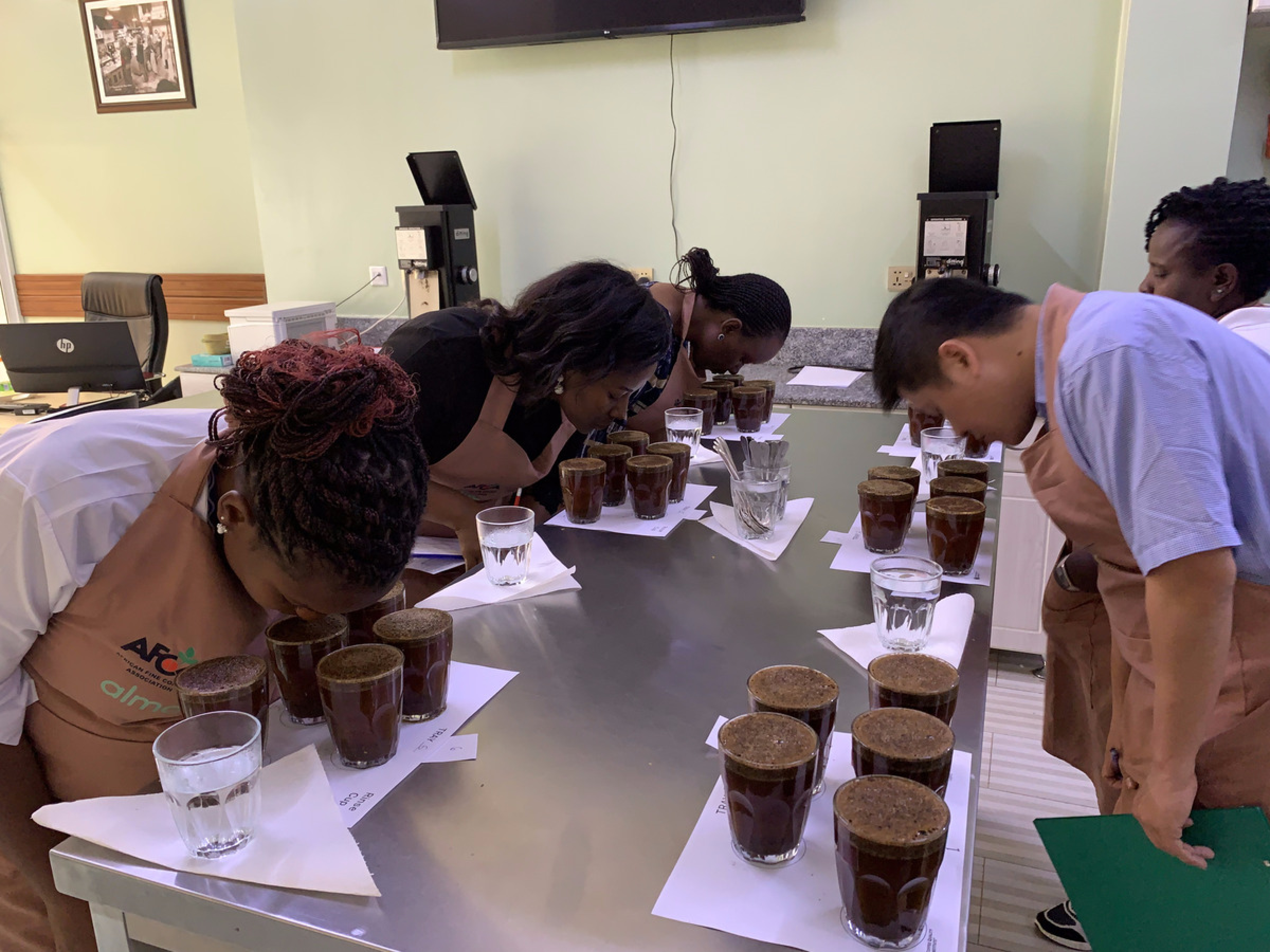
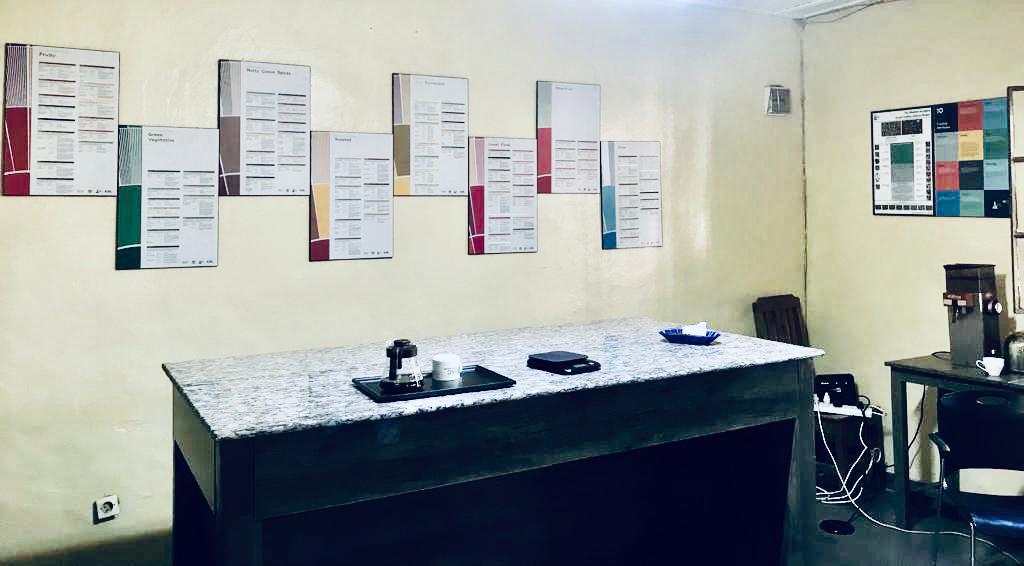
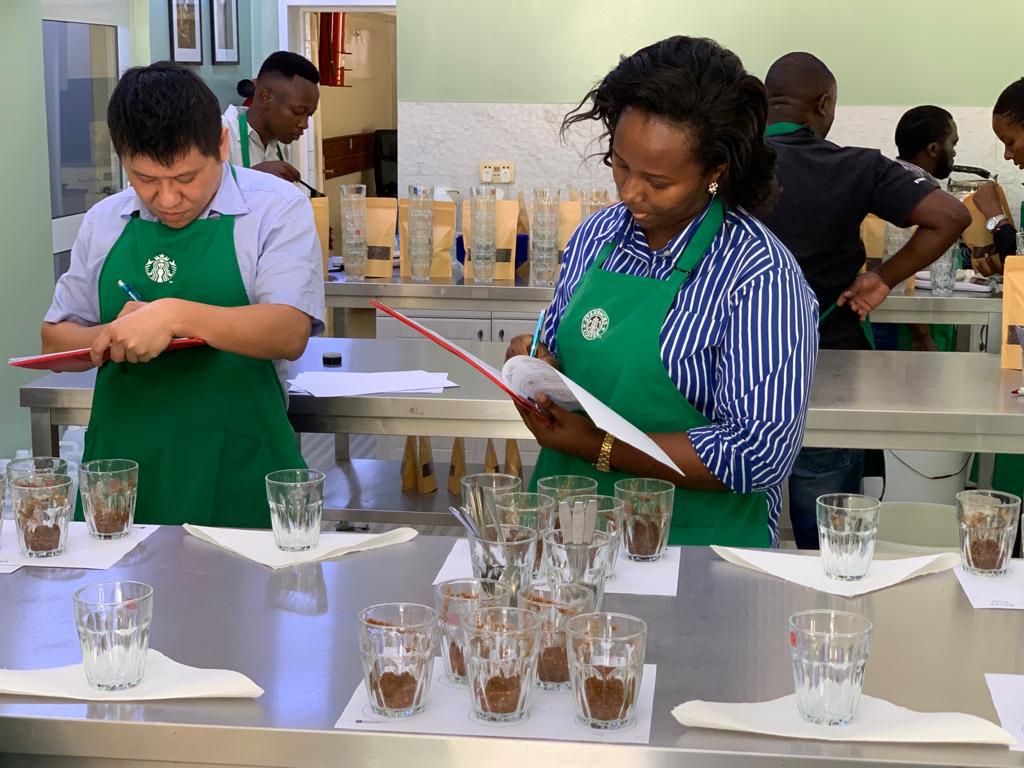
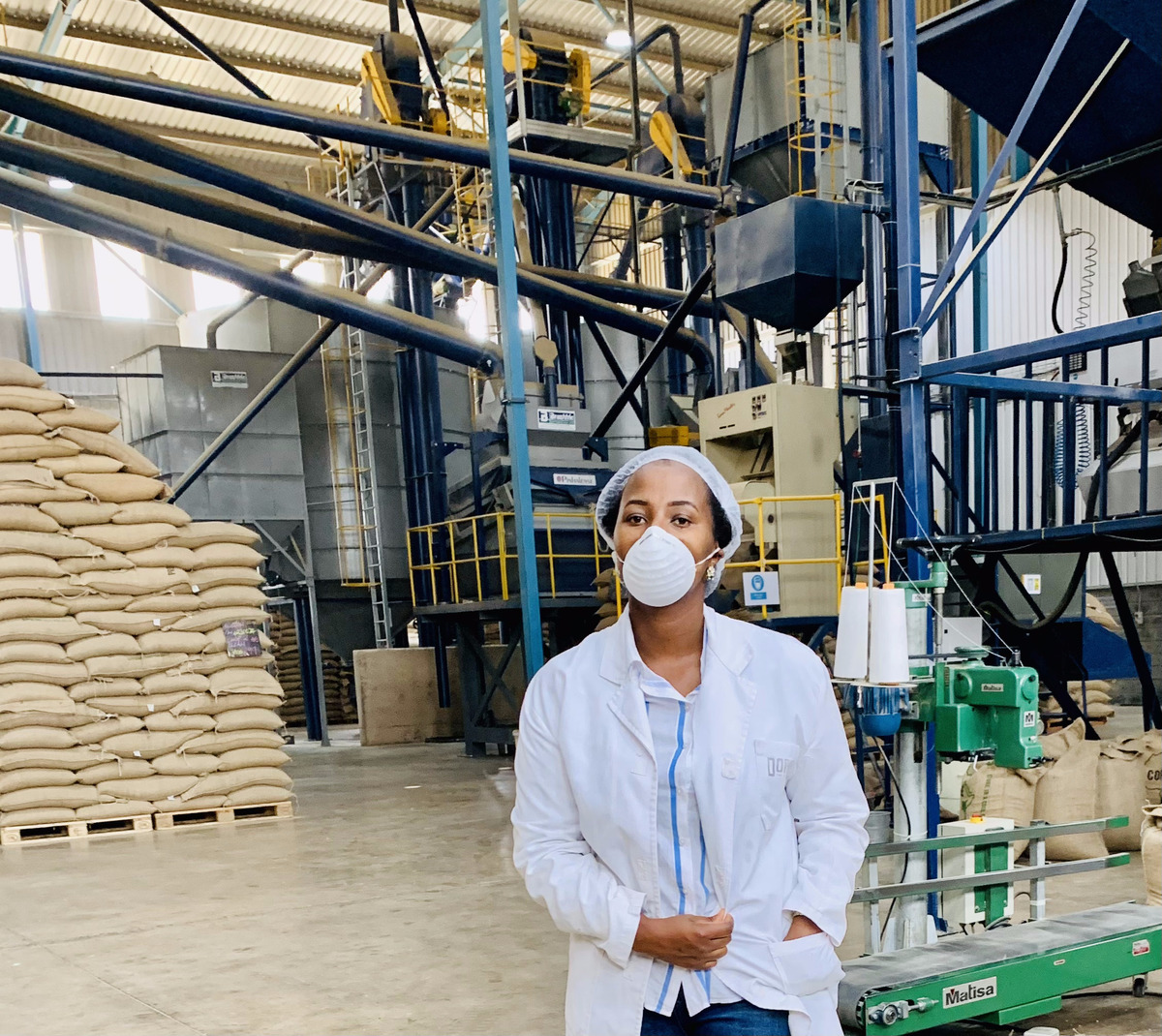
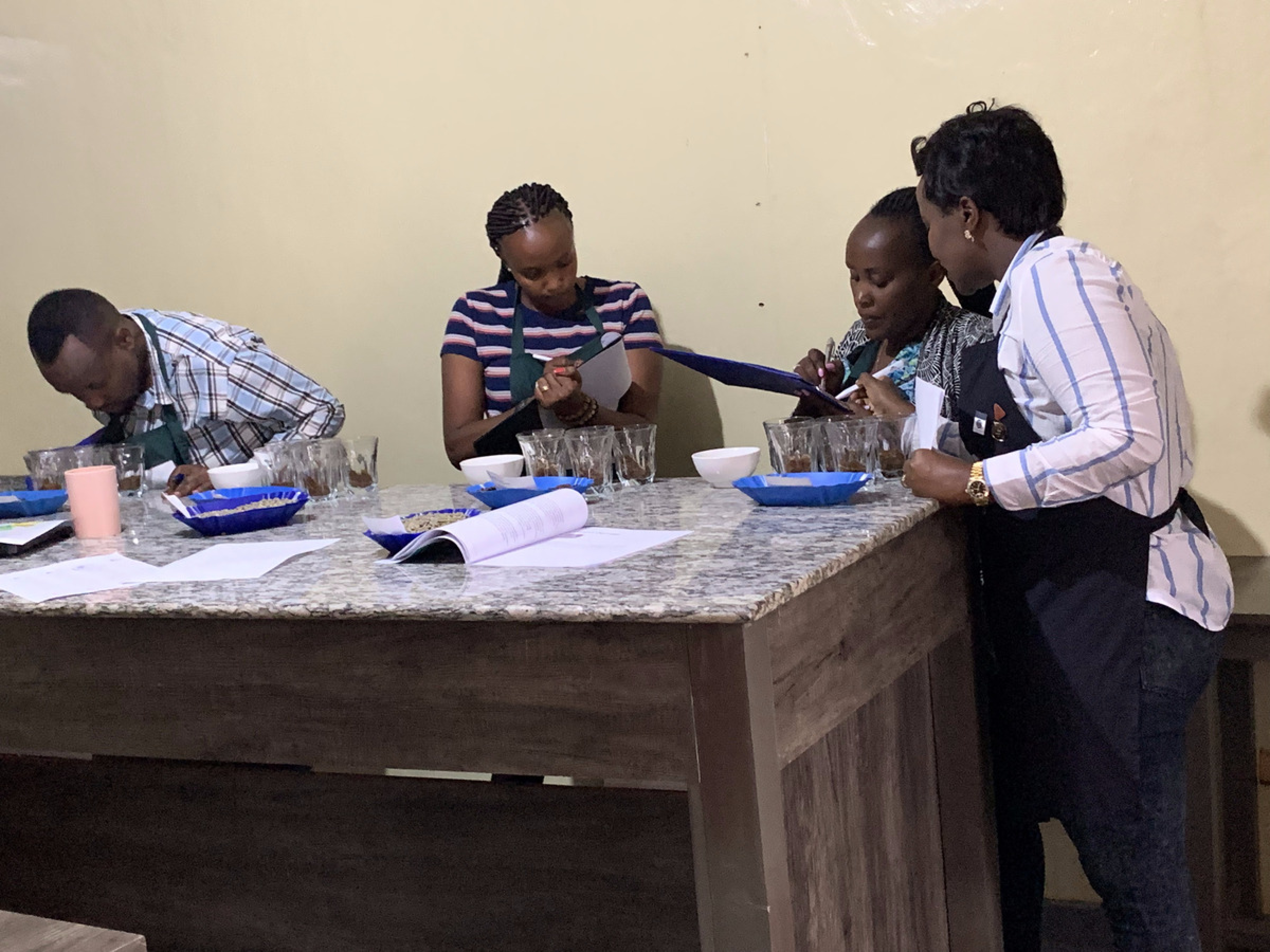
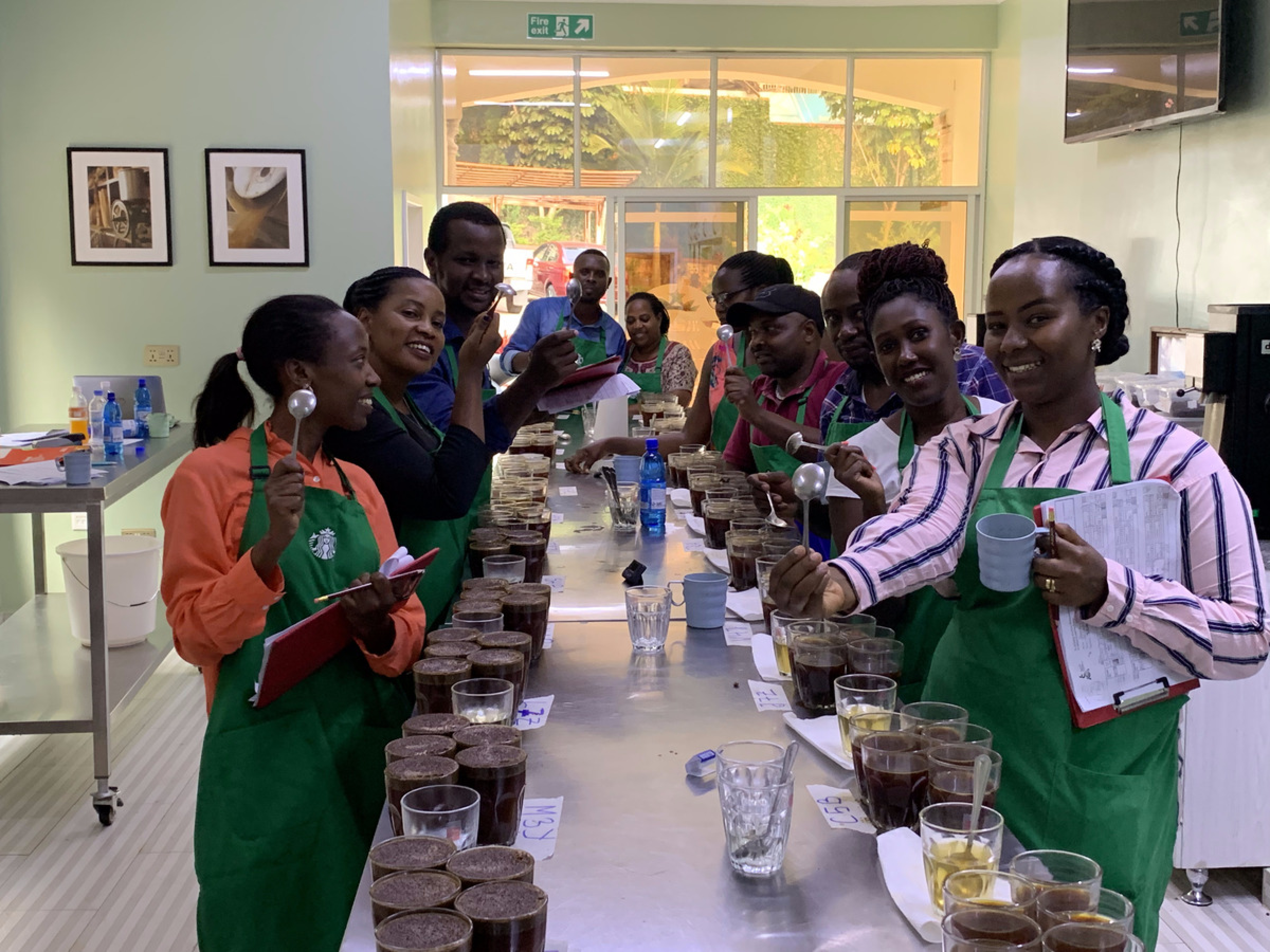
Develop professional skills for everyone involved in the coffee supply chain by providing work-based training. We focus on quality evaluation best procedures at every stage of the supply chain to improve the overall quality of coffee.
To pave the way towards economic growth, self-sufficiency, a sustainable environment, and strong coffee communities.
Supporting farmers, processors, and producers to be competitive in the international market and to have a common language with buyers, roasters, baristas, and final consumers by relating them to international standards.
Women and youth are empowered to join the Hills Coffee Lab program and are the first to benefit from available scholarship programs.
Our Founder, Engineer Grace Mukayisenga, started her career as a Food Science and Technology student intern in NAEB coffee & tea labs, where cupping became her passion. She joined the Cup of Excellence national jury in 2012 and earned her CQI Q Grader certification in 2013, becoming one of only four certified cuppers in the country at the time.
After graduating in 2014, she served as a Quality Control Manager, overseeing coffee quality, blending, roasting, and training. In 2019, she became an Authorized SCA Trainer and has since trained numerous farmers, wet mill managers, and baristas.
Grace is the first Rwandan to offer internationally recognized certificates in Green Coffee and Sensory Skills. She is deeply committed to empowering women and youth to join the coffee value chain, securing the future of the industry.

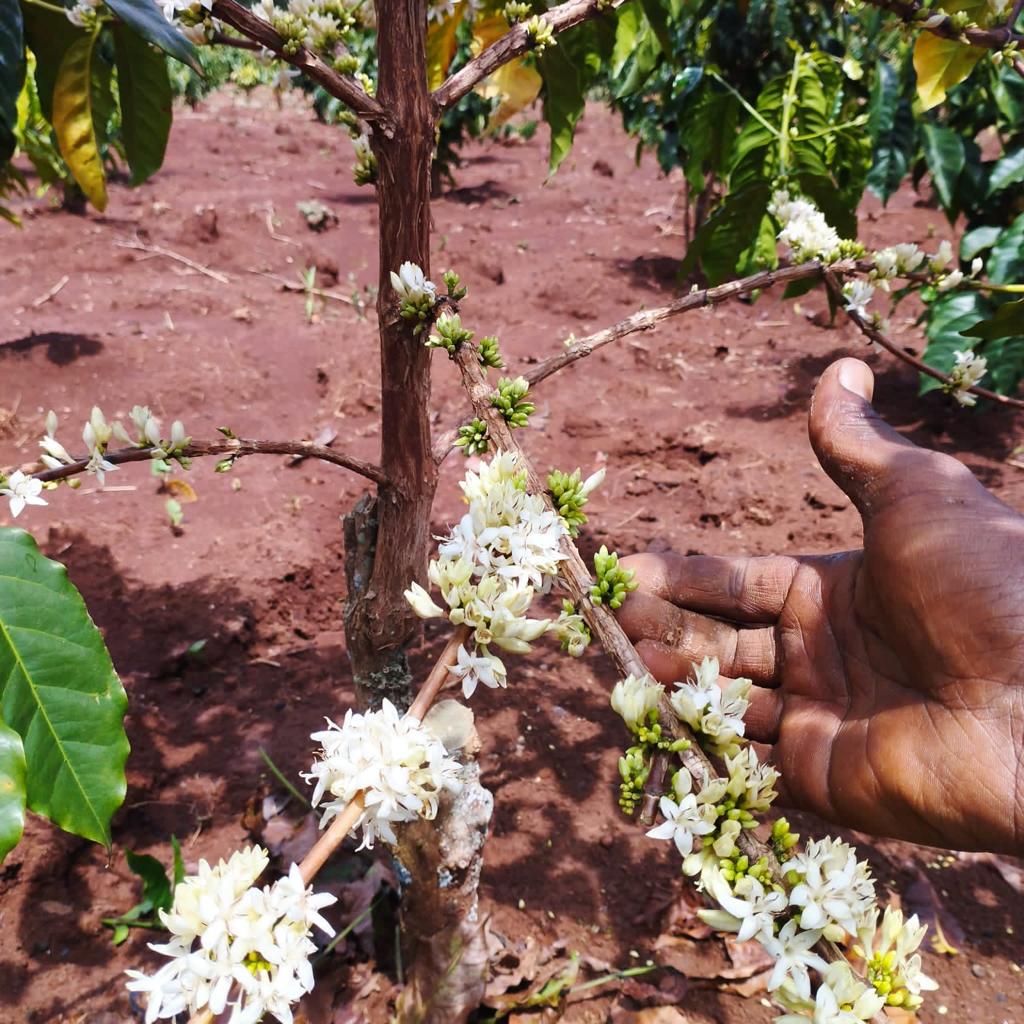
The Introduction to Coffee course is ideal for anyone who is new to specialty coffee. It charts coffee’s journey from its origins in Ethiopia to the major commodity that it is today. This course gives a general overview of the specialty coffee supply chain and explores topics such as history and cultivation, variables that affect coffee quality, basics of sensory analysis, fundamentals of roasting.
To prepare the student for more complex job functions found in the green coffee profession. Specifically: Botany and agronomy, Processing detailed quality results, Defects and positive grading variables, Green coffee contracts, Seasonality and storage variables, Market terminology, Decaffeination, and Certification mechanisms.
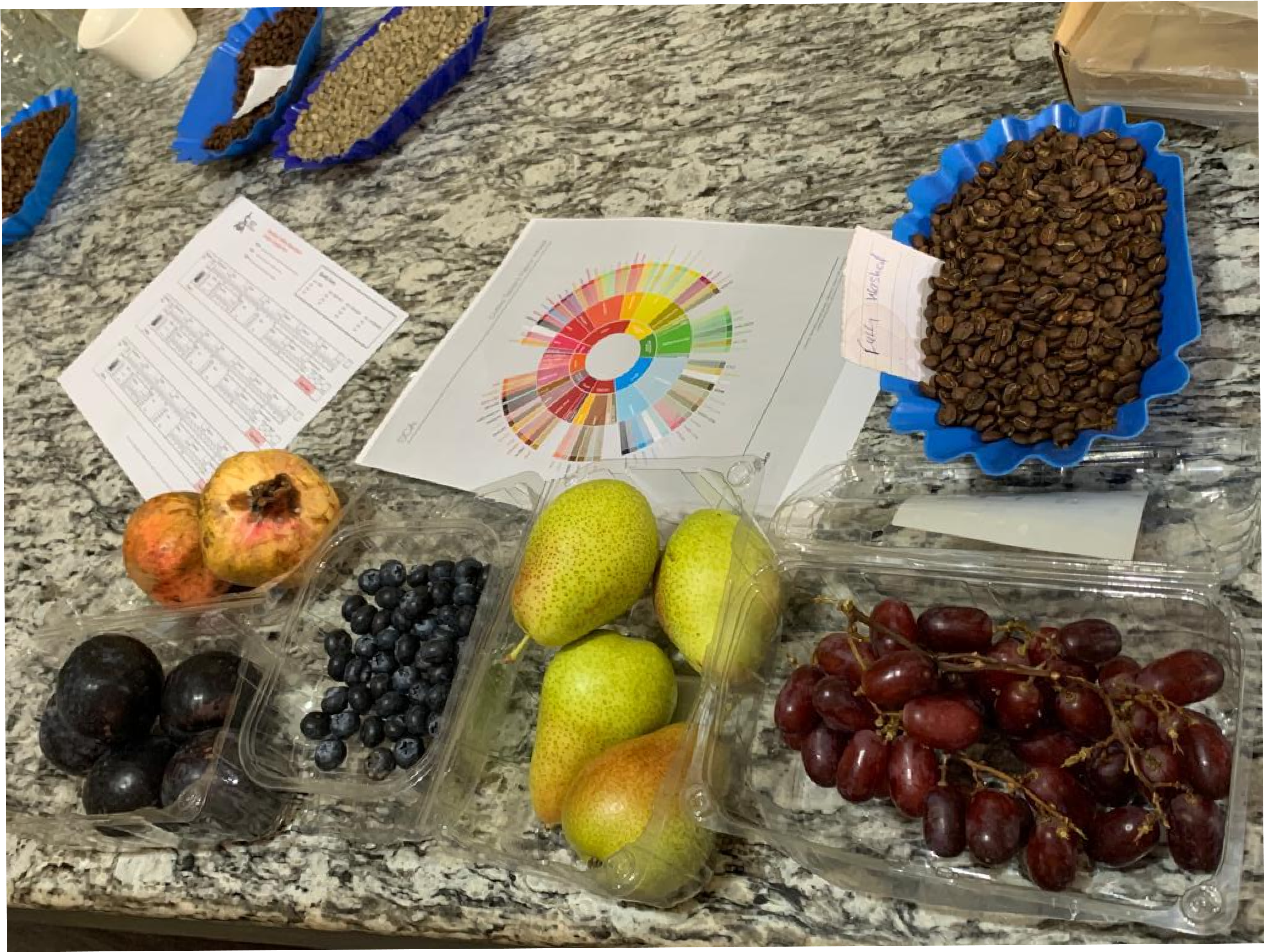
To enable the student to apply core concepts of sensory science to analyze aroma, taste, and body differences in coffee. Students will be introduced to various testing methods including triangle and in/out and they will progress in their calibration of the SCA cupping form. Students will examine basic requirements for developing a sensory program.
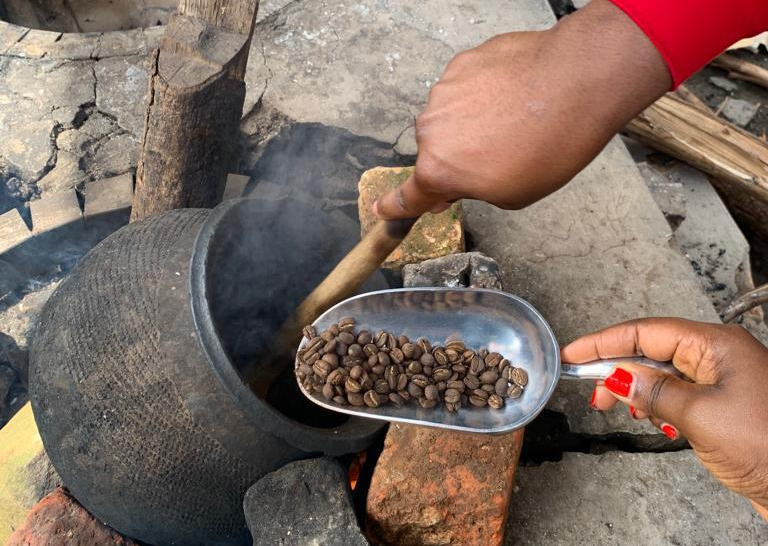
The Roasting modules teaches about the roasting process, including roast cycle, roast levels, identifying defects, the physical changes that beans undergo during the roasting process, as well as workspace management and lean production.
This 2-day, live class continues the development of coffee-centric quality evaluation skills by introducing the main sensory tools and testing methods used by large food & beverage companies around the world to standardize and unify their production. Flavor and quality context is a trained, practiced, and continually evaluated skill.
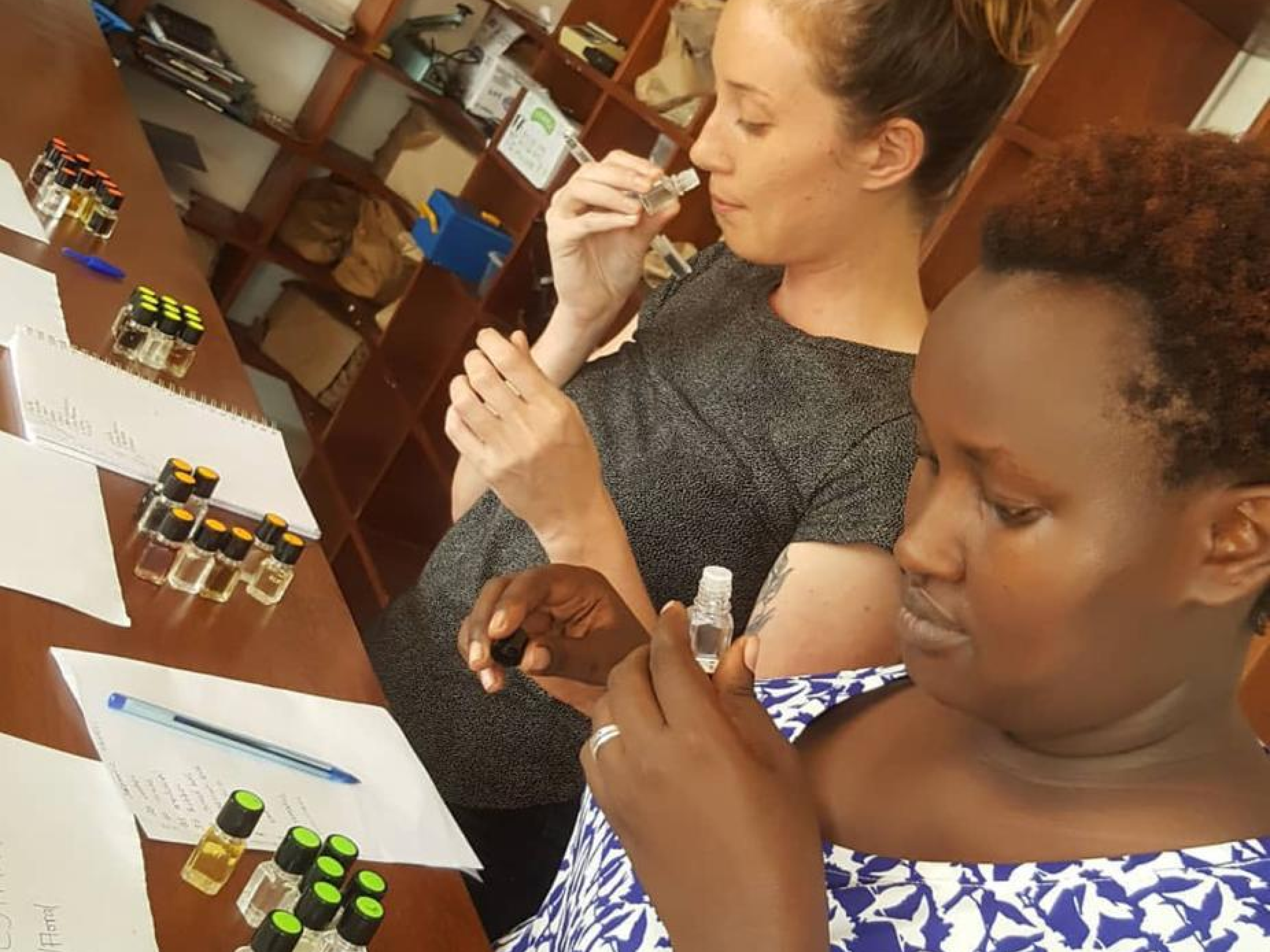
This is a 1-day, live class that is designed to introduce the CQI Flavor standards. Providing a basic understanding of how the senses of taste and smell function. The attendee will learn how to prepare and recognize CQI Flavor Standards. Who is it for? Any Q Arabica or Q Robusta Grader.
This 1-day, live class enables the attendee to develop a basic understanding of the human gustatory system and its role in the coffee evaluation process. This interactive class will introduce the attendee to the basic functionality and components of the human gustatory system.
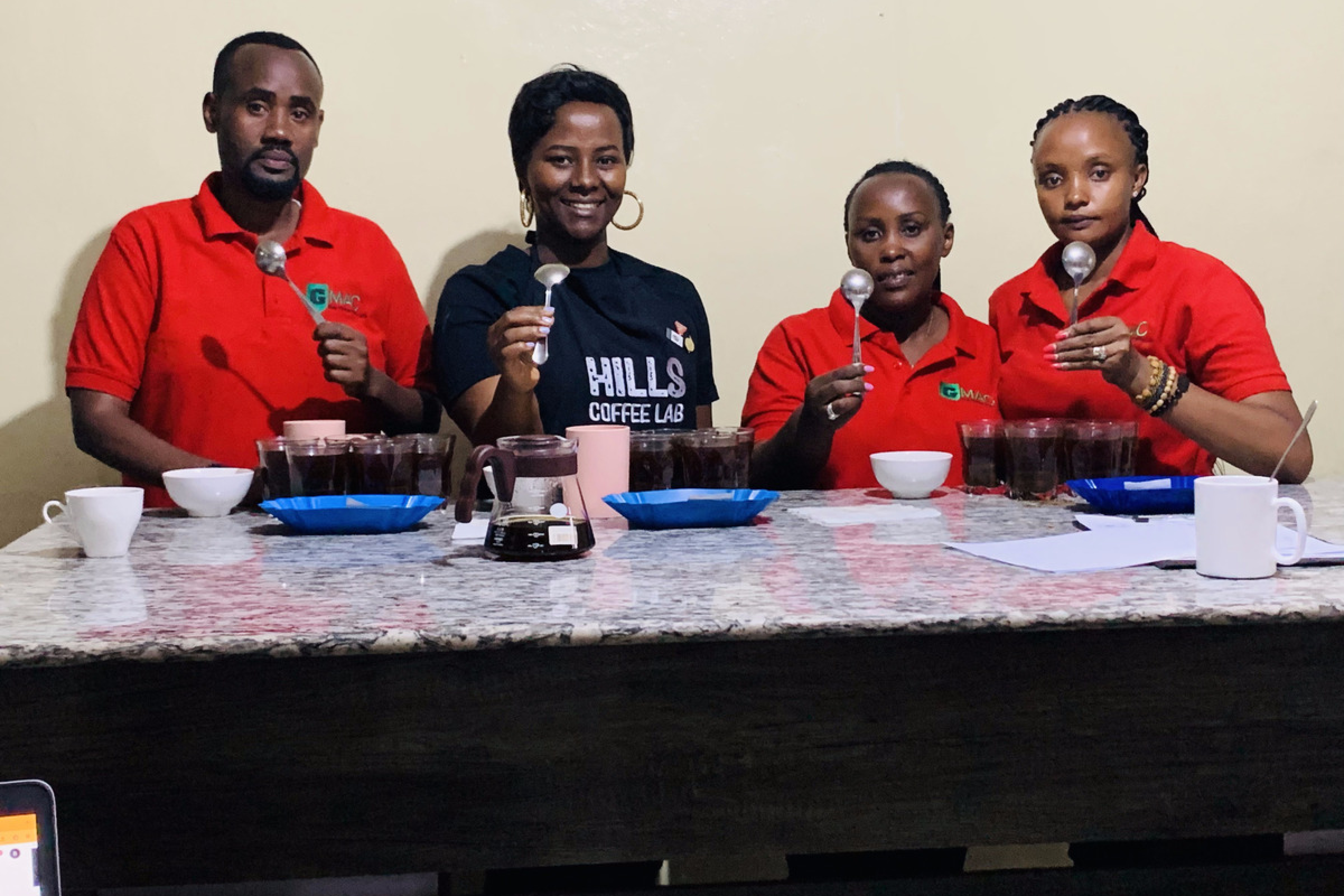
This 2-day, live class teaches all new coffee people how to set up a cupping and evaluate coffee consistently with CQI’s best practices and protocols for Q graders. Attendees will learn the fundamental mechanics of olfaction, gustation, taction and aroma memory recall.
Kigali, Rwanda